 BeNewz

Related Articles



Government raises POL prices from Oct 1 following OGRA’s recommendations
BeNewz Report
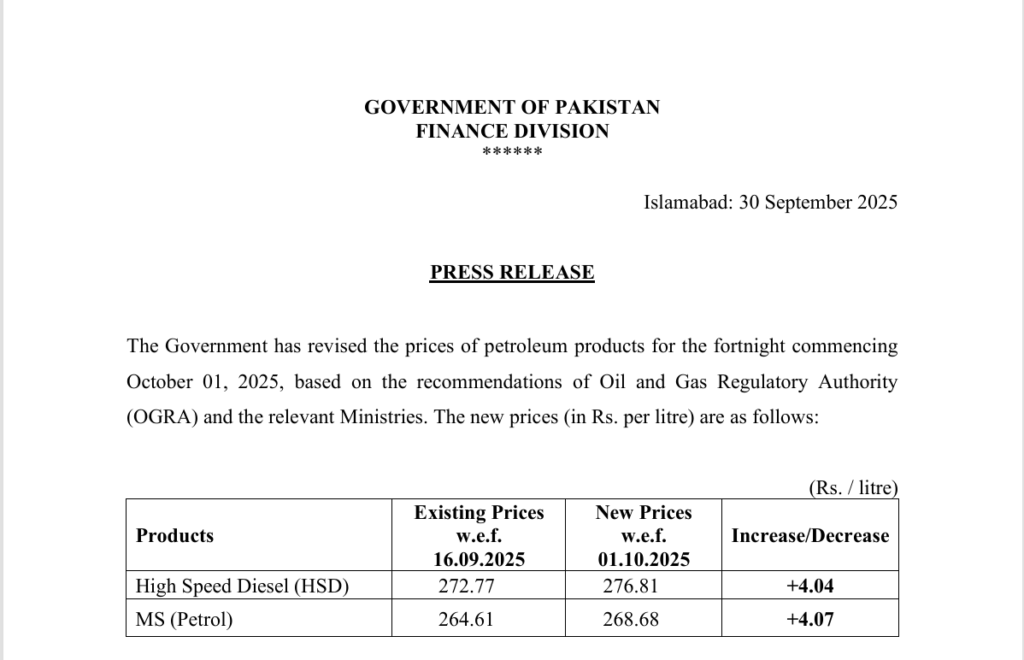
The Government has increased petroleum prices for the first half of October 2025, with petrol and diesel rates going up by more than Rs 4 per litre. The revised rates, effective from October 1, follow recommendations by the Oil and Gas Regulatory Authority (OGRA) and input from relevant ministries.
According to the official press release issued by the Finance Division on September 30, the price of High Speed Diesel (HSD) has risen from Rs272.77 to Rs276.81 per litre, marking an increase of Rs 4.04. Similarly, the price of MS (petrol) has been revised upward from Rs264.61 to Rs268.68 per litre, reflecting a hike of Rs4.07 per litre.
The hike comes at a time when global crude oil prices have seen volatility, contributing to costlier imports for Pakistan. Brent crude futures have hovered above $90 per barrel in recent weeks due to geopolitical tensions and extended production cuts by OPEC+ members. These international pressures often trickle down to domestic fuel pricing due to Pakistan’s dependence on imported oil.
Under Pakistan’s current fuel pricing mechanism, petroleum rates are revised biweekly based on movements in global oil prices, currency exchange rates, and domestic tax policies. The adjustments are made in consultation with OGRA, which calculates the recommended price based on import costs and other variables. The final rates are approved by the finance ministry and announced publicly through official channels.
This recent increase is likely to have a cascading effect on inflation. Petroleum prices significantly influence the cost of goods transport, electricity generation, and agricultural operations. Previous hikes in fuel prices have triggered price surges across food, manufacturing, and service sectors, directly impacting household budgets and overall consumer confidence.
The timing of this hike is also notable, as it comes amid rising criticism of the government’s broader economic policies. In recent weeks, both business chambers and civil society groups have urged the government to ease inflationary pressures, particularly with electricity and fuel costs already under scrutiny. Some analysts have warned that continued price hikes may undermine economic recovery efforts by further dampening purchasing power.
Historically, fuel prices have played a central role in shaping Pakistan’s economic and political discourse. In 2022, a series of back-to-back increases in petroleum prices contributed to widespread public protests and policy backlash. Since then, successive administrations have had to balance fiscal pressures—such as commitments made to the International Monetary Fund (IMF)—against public tolerance for inflation.
Despite the backlash, the government maintains that petroleum levy remains a key revenue-generating tool. Under IMF loan conditionalities, Pakistan is required to meet aggressive tax and revenue targets, which includes maintaining or increasing fuel levies. As of the latest fiscal arrangements, the petroleum development levy on MS and HSD has been set at the statutory maximum of Rs60 per litre, generating billions in non-tax revenue each quarter.
The new pricing regime will remain in effect until mid-October, when the next fortnightly review is expected. Experts suggest that any relief in petroleum prices is contingent on two main factors: a decline in global crude oil rates and relative stability in the rupee-dollar exchange rate, which has remained volatile throughout 2025.
With the winter months approaching, demand for diesel typically rises, particularly for heating and agriculture-related usage in rural areas. If current trends persist, another upward revision in mid-October cannot be ruled out, barring any significant shift in international oil markets.
As Pakistan continues to navigate complex economic terrain, fuel price revisions remain a critical indicator of both fiscal policy direction and broader cost-of-living trends. The government has yet to indicate any plans for fuel subsidies or relief packages to cushion the impact of rising prices on the lower and middle-income segments of the population.
Petrol and diesel, being the two most widely used fuels in the country, are expected to influence not only transport fares but also utility bills, food prices, and inflation indices for the rest of October.