 BeNewz

Related Articles


Aftab Maken
ISLAMABAD: Pakistan and the United States are on the cusp of a significant breakthrough in their bilateral trade relations, with both nations aiming to finalize a crucial trade deal by next week.
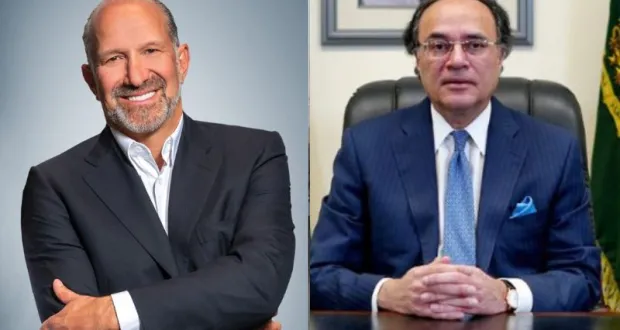
This optimistic timeline emerged from a virtual meeting held on Tuesday between Pakistan’s Finance Minister Muhammad Aurangzeb and United States Commerce Secretary Howard Lutnick, said an official release of the Finance Ministry.
The high-level discussion focused on resolving contentious issues such as reciprocal tariffs, which have been a point of friction, particularly since the imposition of steep tariffs by the Donald Trump administration on several countries, including Pakistan. Islamabad has been actively seeking reprieve from these duties, which currently stand at 29% on Pakistani exports and are temporarily suspended until July.
Both Finance Minister Aurangzeb and Commerce Secretary Lutnick expressed satisfaction with the substantial progress made during ongoing negotiations. Their shared commitment to concluding the trade talks by next week underscores the urgency and importance both nations attach to this agreement. This deal is not merely about tariffs; it is envisioned as a stepping stone towards a broader partnership rooted in strategic and investment interests, encompassing various areas of mutual concern.
The dialogue centered on concrete strategies to enhance trade volumes, promote cross-border investment, and deepen overall economic ties in a manner that benefits both countries. Technical-level talks, a critical component of these negotiations, are also expected to wrap up by next week, paving the way for the formalization of the agreement.
For Pakistan, the timely conclusion of this trade agreement is of paramount importance. The United States remains Pakistan’s largest export market, with Pakistani goods worth $5.44 billion exported to the US in 2024. Nearly 90% of these exports consist of textiles, a sector particularly vulnerable to tariff impacts.
Analysts have consistently warned that sustained tariffs could undermine Pakistan’s fragile economic recovery, making a favorable resolution crucial for Islamabad’s financial stability and export-driven growth strategy. To counter the trade imbalance and ease tariff pressures, Pakistan has also offered to increase imports of US goods, including cotton and soybeans, and explore avenues for US investment in key sectors like mining.
The broader partnership envisioned goes beyond just trade. Discussions during the meeting also touched upon exploring investment opportunities in Pakistan, with emphasis on sectors like IT, agriculture, renewable energy, and manufacturing.
Pakistan has actively showcased its improved investment climate, highlighting initiatives like the Special Investment Facilitation Council (SIFC), designed to streamline approvals and facilitate public-private partnerships. The US, in turn, has shown keen interest in Pakistan’s mineral sector, including the potential for investment in projects such as the $7 billion Reko Diq copper-gold project.
With both parties demonstrating confidence in a timely conclusion, the anticipation is high that this agreement will not only resolve immediate tariff concerns but also lay a robust foundation for a more diversified, resilient, and mutually beneficial economic relationship between Pakistan and the United States in the years to come.