 BeNewz

Related Articles


BeNewz
ISLAMABAD: The government has accelerated work on three landmark social impact initiatives aimed at boosting skills development, providing affordable credit to small farmers, and promoting household energy efficiency, with launches targeted in the coming weeks.
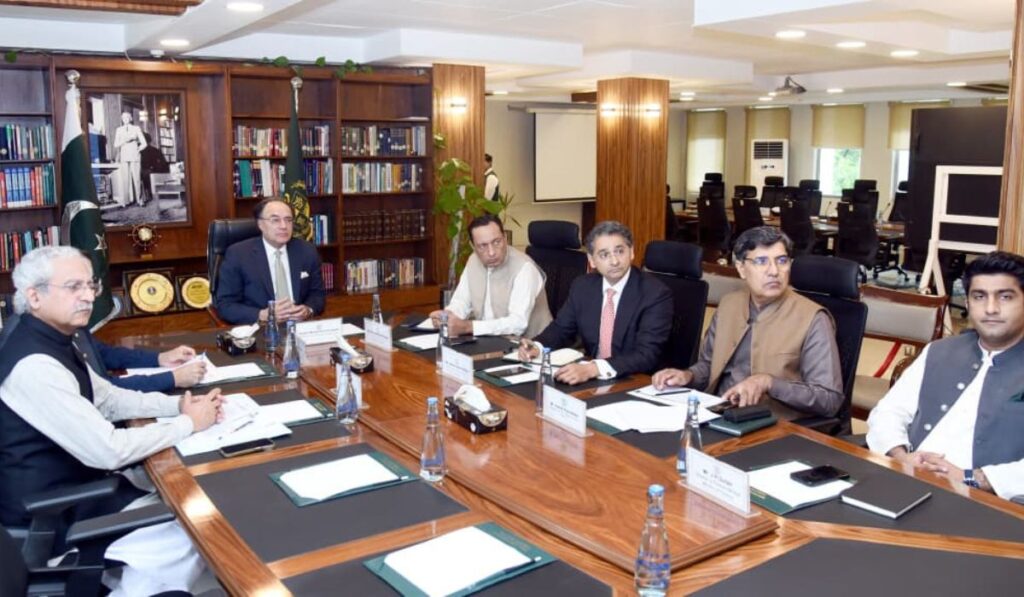
Federal Minister for Finance and Revenue, Senator Muhammad Aurangzeb, chaired back-to-back meetings on Thursday to review progress on the projects, directing ministries, regulators, and partner institutions to ensure their timely roll-out in line with the Prime Minister’s vision for inclusive and sustainable growth.
The three initiatives — the Pakistan Skills Impact Bond, the National Subsistence Farmers Support Scheme (NSFSS), and the Prime Minister’s Fan Replacement Programme — are being developed under close coordination between the Finance Ministry, relevant line ministries, the State Bank of Pakistan, banks, provincial IT boards, and technical partners.
Pakistan’s First Skills Impact Bond
The Pakistan Skills Impact Bond will be the country’s first domestically raised outcomes-based financing instrument, developed under the Social Impact Financing Framework devised by a Prime Minister-appointed committee led by the Finance Ministry.
The bond will mobilise capital from domestic and international private investors as well as philanthropic sources, with financing tied to one or more of the framework’s six priority pillars and aligned with selected Sustainable Development Goals (SDGs).
Calling the project a “trailblazer,” Aurangzeb said it would not only meet immediate development needs but also demonstrate Pakistan’s ability to attract a diverse investor base for innovative financing. “This is an opportunity to show the world that Pakistan can lead in results-linked funding models,” he remarked.
Digital Credit Access for Farmers
The NSFSS, approved earlier by the Economic Coordination Committee as part of the Access to Finance framework for farmers, aims to unlock uncollateralized bank loans for smallholder farmers — those owning or cultivating up to 12.5 acres, including tenant farmers.
For the first time, space-based agronomy data from the Land Information and Management System (LIMS) will be used in banks’ credit scoring models. This data-driven approach will allow banks to extend affordable loans for agricultural inputs, replacing costly informal lending from middlemen.
The State Bank is working with commercial banks and the Pakistan Banks’ Association to implement the scheme through a centralized digital portal developed by the Punjab Information Technology Board (PITB), ensuring a seamless, end-to-end process for farmers.
With 97% of Pakistan’s farmers owning less than 12.5 acres, Aurangzeb called the programme a “breakthrough moment” for rural financing, saying it could transform livelihoods, improve productivity, and expand financial inclusion.
Energy-Efficient Fan Replacement Drive
The Prime Minister’s Fan Replacement Programme, co-developed by the National Energy Efficiency and Conservation Authority (NEECA) and banks, will enable households to replace conventional ceiling fans with energy-efficient models via affordable financing.
Under the scheme, the Finance Ministry will provide a nominal first-loss guarantee to encourage banks’ participation. A PITB-developed portal will allow consumers to complete the entire process digitally — from registration and loan application to selecting fans from approved local manufacturers and making repayments.
Several domestic manufacturers have been onboarded, and production capacity will be expanded to meet anticipated demand. The minister said the scheme would not only cut household energy consumption but also generate jobs and boost SME growth. “This is about embedding energy efficiency into everyday choices,” he said.
Push for Early Roll-Out
Aurangzeb directed all stakeholders to step up coordination and finalise arrangements without delay, stressing that early launch would signal government efficiency and commitment to delivering tangible benefits.
“These projects can serve as models for scaling up both in Pakistan and internationally,” he said. “Delivering them effectively will send a clear message that Pakistan is ready to innovate, ready to partner, and ready to deliver results that matter for its people.”