 BeNewz

Related Articles



BeNewz Report
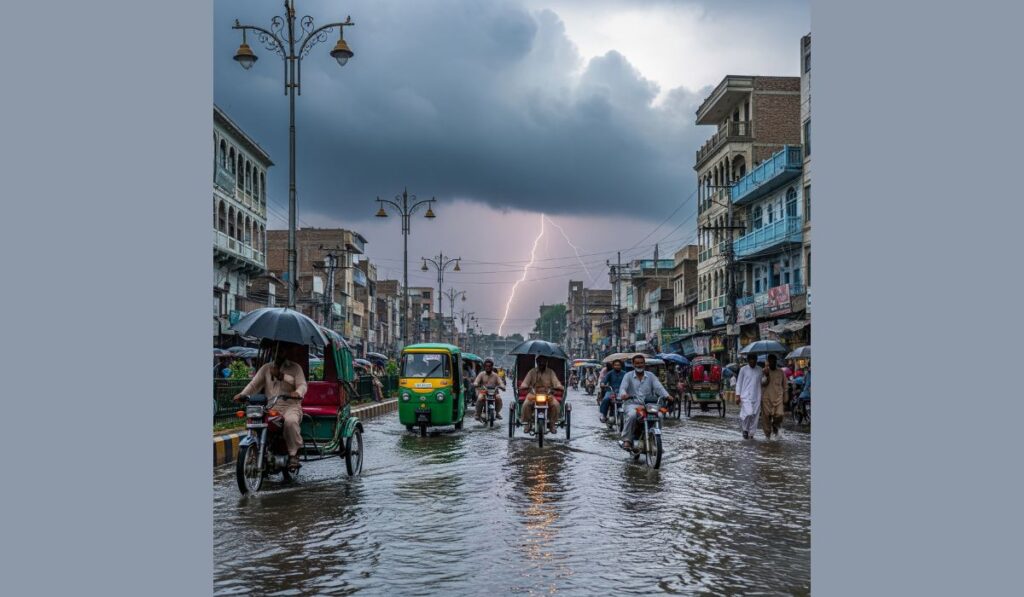
ISLAMABAD: Pakistan’s National Disaster Management Authority has issued a nationwide alert for heavy rains and potential urban and rural flooding from August 23 to 30.
A fresh spell of monsoon rains has begun across northern and central Pakistan as a new westerly weather system entered the country’s upper regions. According to the National Disaster Management Authority (NDMA), heavy rainfall is expected between August 23 and 30, posing risks of urban flooding, flash floods in streams and rivers, and landslides in hilly areas. The Pakistan Meteorological Department has also issued a weather advisory from August 23 to 27, urging local administrations to take precautionary measures.
The NDMA report highlights that the heaviest rains are likely in Azad Jammu and Kashmir and Gilgit-Baltistan. Muzaffarabad and the surrounding districts are expected to receive persistent heavy rainfall until August 27. Authorities have warned that landslides in these regions could disrupt road connectivity and complicate rescue operations.
Khyber Pakhtunkhwa and northern Punjab are also set to be hit by the downpour. Cities including Peshawar, Abbottabad, Mansehra, Swat, and Dir, as well as Islamabad, Rawalpindi, and Lahore, are forecast to experience heavy rains. Poor drainage systems in urban areas may result in waterlogging and traffic disruptions.
Sindh province is expected to come under this rain system as well. Karachi, Thatta, Sujawal, Badin, Tharparkar, Hyderabad, Jamshoro, Nawabshah, Dadu, Khairpur, Sukkur, Ghotki, Larkana, Jacobabad, Shikarpur, Kashmore, and Shaheed Benazirabad have been identified as likely hotspots for intense rainfall. Past experiences in Sindh show that heavy rains often lead to urban flooding and prolonged power outages.
The NDMA has instructed provincial and district administrations to keep emergency equipment and response teams on standby. Authorities in major cities have been directed to clear drainage systems and strengthen embankments along streams and rivers to protect vulnerable settlements. Citizens have been advised to avoid unnecessary travel and relocate from low-lying or flood-prone areas where possible.
In recent years, Pakistan’s monsoon rains have caused unprecedented damage. The devastating 2022 floods affected around 33 million people nationwide, with economic losses estimated at $15 to $30 billion. In this context, the NDMA has called the current rain spell particularly dangerous and emphasized the importance of early preparedness.
A summary of monsoon-related damages and losses in Pakistan over the last three years is presented below:
| Year | Major Monsoon/Flood Event | People Affected | Estimated Economic Loss | Sources |
|---|---|---|---|---|
| 2022 | Record monsoon floods | 33 million | $15–30 billion | World Bank PDNA, Britannica |
| 2021 | (Unverified data) | — | — | — |
| 2020 | South Asian floods (Pakistan impact) | — | $1.5 billion (Pakistan) | Wikipedia |
Experts note that climate change is altering rainfall patterns in Pakistan, leading to shorter but more intense downpours that overwhelm rivers and urban infrastructure. This has increased the frequency of flash floods and landslides. The government, in coordination with international partners, has begun work on long-term resilience projects to reduce the risks of such disasters.
The NDMA stated that close monitoring of this rain spell is underway, with federal and provincial authorities on high alert for emergency response. However, officials stressed that community-level preparedness remains as vital as institutional readiness.
This monsoon system is expected to affect much of the country throughout the week, and experts have warned that without timely preventive measures, the destruction seen during the 2022 floods could be repeated. The NDMA has confirmed that this spell may continue until August 30, with relevant departments directed to remain fully alert.