 BeNewz

Related Articles

Aftab Maken
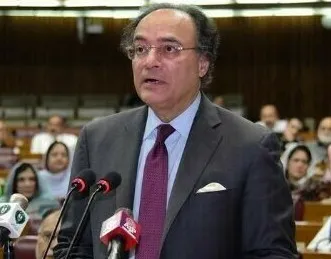
ISLAMABAD: As part of broader tax reform measures under Budget 2025-26, Federal Finance Minister Muhammad Aurangzeb announced that the government is introducing stricter controls on tax fraud involving fake invoices and tampered records, with arrest powers granted in fraud cases exceeding Rs 50 million.
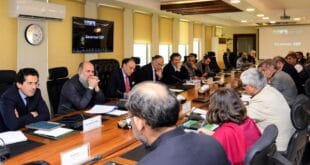
Briefing the Senate Standing Committee on Finance, the finance minister said that Prime Minister Shehbaz Sharif has directed that the Federal Board of Revenue (FBR) should limit the discretionary powers of tax officials to avoid misuse of arrest provisions.
“A special three-member FBR committee will now oversee and approve arrests in tax fraud cases,” Aurangzeb said. “Only in cases where evidence proves invoice fabrication or record tampering — and the fraud involves more than Rs 50 million — will arrest be an option.”
He added that individuals involved in suspected tax evasion will be served three show-cause notices, and arrest will only follow if there’s no response. Additionally, arrest may be considered if there’s a risk of the accused fleeing. “Four legal safeguards will apply before any arrest,” Aurangzeb assured. “And if a court finds that an officer acted with dishonesty, action will be taken against them.”
As part of broader fiscal restructuring, Aurangzeb also confirmed that the subsidy regime is being gradually withdrawn to ensure better targeting of state resources.
On the hot-button issue of the 18% sales tax on solar panels, FBR Chairman Malik Amjed Zubair Tiwana said the proposed tax would generate an estimated Rs 20 billion in revenue, matching the Rs 20 billion being spent annually in subsidies on imported solar energy equipment. “If the government can find Rs 40 billion from another source, we will gladly drop the solar tax,” he remarked.
The proposal, however, faced backlash from lawmakers and coalition partners. Committee members questioned the contradiction in the government’s green energy policy, stating, “On one hand, the government introduces a carbon levy to promote clean energy. On the other, it imposes a heavy tax on solar panels — which sends a mixed message.”
Members urged the government to explore innovative revenue options such as higher taxation on sugary beverages and non-essential luxury items, while emphasizing investment in technology transfer and sustainable development.
They also criticized the justification for taxing the solar sector, pointing out that only a handful of domestic companies manufacture solar panels. “The market share of local manufacturers is still too small to merit protection through import taxes,” said Committee Chairman Naveed Qamar. “We are already offering incentives — now is not the time to discourage renewable energy adoption.”
The ongoing debate underscores the challenge facing policymakers: balancing revenue needs with Pakistan’s commitments to a green economy, energy sustainability, and climate resilience.