 BeNewz

Related Articles


Aftab Maken
The Senate finance committee saw heated debate as FBR confirmed AI-powered monitoring in sugar, cement and other key sectors, while lawmakers also moved to summon banks over excessive profit under Islamic banking.
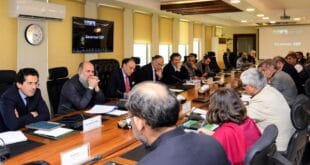
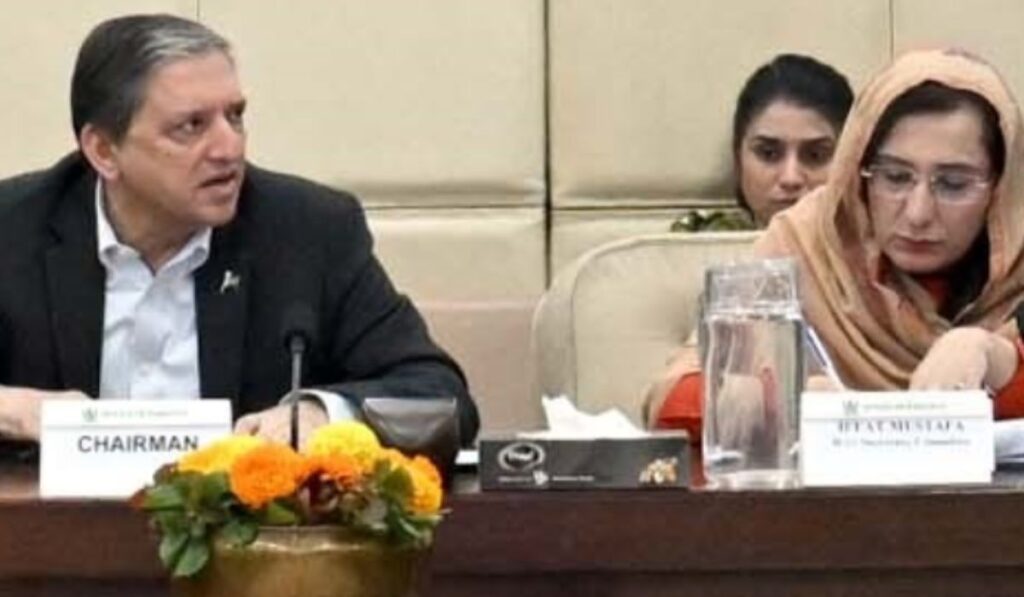
Federal Board of Revenue (FBR) has decided to install AI-based video analytics systems across 17 major industrial sectors to curb tax evasion and improve production monitoring. The issue came under sharp discussion during a meeting of the Senate Standing Committee on Finance, where several industry representatives — including a Chinese manufacturing company — opposed camera installation inside factories.
FBR Chairman told the committee that the number of cameras had already been reduced from 16 to four per unit to minimize disruption. These cameras will cover conveyor belts, packing areas, and entry and exit points. Officials said the new system will count every tile, pack, and product leaving the facility, helping reconcile actual output with tax declarations.
The committee was informed that the government expects an additional Rs76 bn in tax revenue from the sugar sector and Rs102 bn from the cement industry this year due to improved monitoring and enforcement. The Chinese company argued that similar systems do not exist in Saudi Arabia, Thailand, or comparable markets, and warned that the plan could compromise trade secrets and foreign investment.
The FBR Chairman dismissed the objections and said installation was mandatory. “Install cameras or shut down operations,” he told representatives. He said Prime Minister Shehbaz Sharif has directed installation of cameras across all sugar mills, including those owned by federal ministers, and no one has raised objections. “We do not trust the companies’ internal counting systems — we trust the new AI system,” he added.
The monitoring initiative is part of a broader push to digitize high-risk sectors where under-reporting remains widespread. FBR has previously expanded track-and-trace enforcement in the tobacco sector, which significantly increased tax revenue and reduced leakages.
During the meeting, lawmakers also took up concerns over excessive profit margins being charged under Islamic banking products. Committee Chairman Senator Saleem Mandviwalla said banks were taking higher profit “under the label of Islamic banking.” Senator Farooq H. Naek questioned how the State Bank could allow such practices. Minister of State for Finance Bilal Azhar Kayani acknowledged he was unaware of the issue and promised to take it up with the State Bank, saying he agreed with the committee’s concerns.
The committee also reviewed an error in an Auditor General’s report, where a typo had mistakenly written “billion” instead of “million,” inflating a figure to Rs375 bn. The Deputy Auditor General said action had been initiated, while the finance minister explained that the actual combined figure involved was around Rs9 trn and could be re-verified separately with the Auditor General’s office. The committee approved his proposal.
Senator Kamran Murtaza’s pending agenda item was retained for the next meeting. Senator Dr. Zarqa raised concerns over dress-code suggestions during meetings, arguing Pakistani women already dress appropriately. Senator Farooq Naek said compelling anyone to wear an abaya was equivalent to forcing someone to keep a beard.
FBR’s new AI-enabled monitoring regime marks a significant shift in Pakistan’s tax-administration strategy and is expected to strengthen documentation across sugar, cement and other large-scale sectors in the coming fiscal year.