 BeNewz

Related Articles



Funding to cover severance, dues, and asset disposal as the government winds up the loss-making Utility Stores Corporation
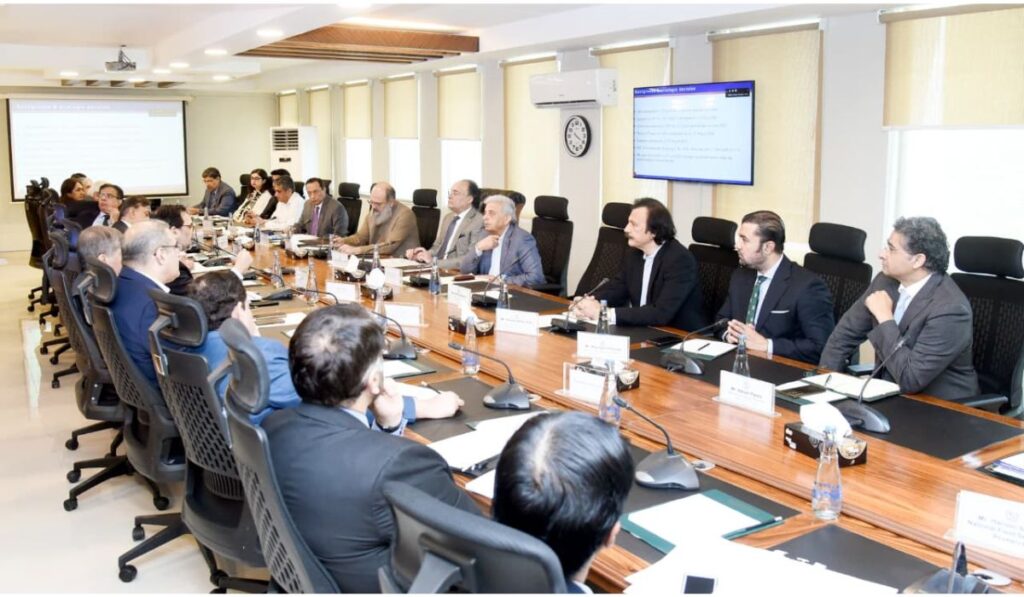
The Economic Coordination Committee (ECC) of the Cabinet on Wednesday approved a technical supplementary grant of Rs 30.216 billion to facilitate the smooth closure of the Utility Stores Corporation (USC), marking a decisive step toward winding down the state-run enterprise that has long strained public finances. The meeting was chaired by Federal Minister for Finance and Revenue Senator Muhammad Aurangzeb and attended by senior ministers and officials from key ministries.
The approved package is aimed at responsibly addressing the longstanding financial liabilities of USC, including payments to employees, creditors, and vendors. According to the Ministry of Finance, the grant will cover severance packages, compensation, and outstanding dues, ensuring that workers receive their entitlements as the corporation is phased out. Officials described the measure as essential to minimizing the social and economic impact of the closure, particularly for employees who had depended on USC for their livelihoods.
The ECC also directed the Ministry of Industries and Production to further rationalize the financial requirements associated with the closure. To offset part of the expenditure, the committee decided that USC’s assets, including properties, would be sold within the current fiscal year. Proceeds from the sale are expected to partially fund liabilities and reduce the burden on the federal budget.
USC, established in 1971 to provide essential commodities to the public at subsidized rates, has, over the years, accumulated heavy financial losses. Critics have long argued that the corporation failed to achieve operational efficiency, with leakages, corruption, and poor management compounding its fiscal drag. Despite multiple attempts at restructuring, the entity became increasingly reliant on government subsidies, making its continuity unsustainable amid Pakistan’s fiscal constraints.
Wednesday’s decision reflects the government’s effort to strike a balance between fiscal responsibility and employee welfare. “The objective is to ensure that the winding down of USC is conducted in an orderly and transparent manner,” an official statement said, underscoring that employee entitlements would be protected. The committee stressed that transparency in the disposal of USC assets was vital to prevent misuse and to maximize proceeds for covering closure costs.
The ECC’s move comes at a time when Pakistan is navigating a difficult economic adjustment program under International Monetary Fund (IMF) oversight, where subsidy rationalization and state-owned enterprise reform remain key conditions. The closure of USC, a heavily subsidized retailer, aligns with the government’s broader drive to streamline public spending, reduce fiscal deficits, and prioritize resources for growth-oriented sectors.
While the closure is intended to reduce fiscal pressures, it also raises concerns about the availability of subsidized essentials, particularly for low-income households. In recent years, USC outlets played a role in government-run relief programs, such as Ramadan and Ehsaas packages. Economists warn that phasing out USC without parallel mechanisms could affect vulnerable groups, unless subsidy programs are redesigned through targeted cash transfers or digital platforms.
The ECC meeting was attended by Federal Minister for National Food Security and Research Rana Tanveer Hussain, Federal Minister for Commerce Jam Kamal Khan, Federal Minister for Power Sardar Awais Ahmad Khan Leghari (virtually), Special Assistant to the Prime Minister for Industries and Production Haroon Akhtar Khan, alongside federal secretaries and senior officials from relevant ministries, departments, and regulators.
The Rs30.2 billion grant reflects the government’s commitment to closing USC with minimum disruption, while signaling a broader policy shift away from blanket subsidies toward targeted welfare spending. For employees, the severance and compensation packages are expected to provide temporary relief, though the long-term challenge of absorbing displaced workers into the labor market remains.
As the process moves forward, the sale of USC assets will be closely monitored as a test of transparency in public-sector reforms. The closure of Pakistan’s largest state-run retail chain marks not only the end of an era in consumer subsidy distribution but also a signal of the government’s intent to reduce reliance on loss-making enterprises in pursuit of fiscal discipline.