 BeNewz

Related Articles


Aftab Maken
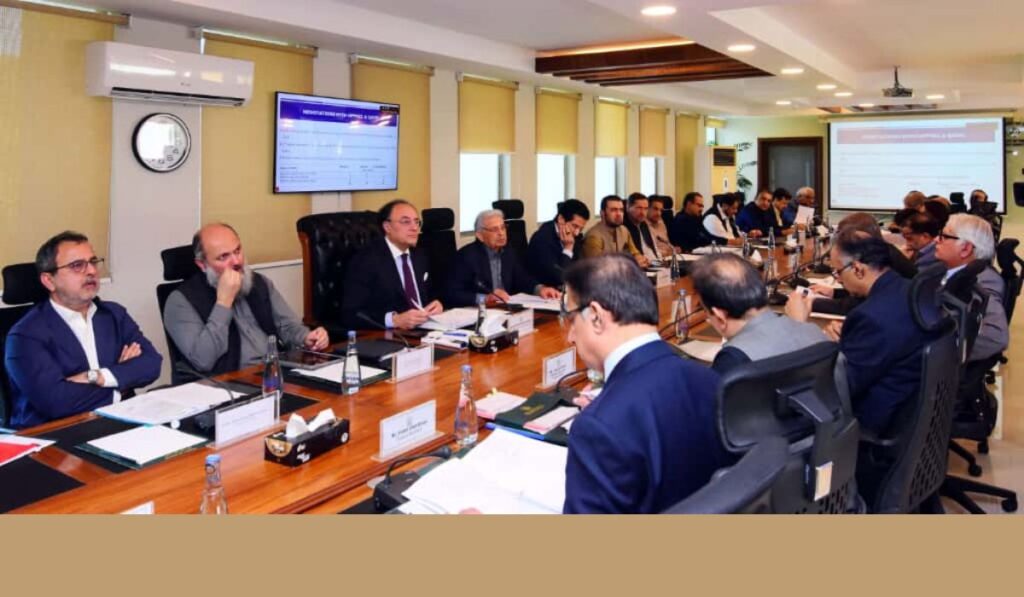
ISLAMABAD: The Economic Coordination Committee (ECC) of the Cabinet on Thursday approved a series of measures aimed at stabilizing Pakistan’s power sector and maintaining steady remittance inflows. The meeting, chaired by Finance Minister Senator Muhammad Aurangzeb at the Finance Division, endorsed multiple financial frameworks to rationalize tariffs, settle outstanding dues, and phase out subsidy-driven incentive schemes.
According to an official statement, the ECC approved a proposal submitted by the Power Division concerning tariff adjustments and payment settlements involving nuclear power plants (NPPs), government-owned power producers (GPPs), the Oil and Gas Development Company Limited (OGDCL), and Sui Northern Gas Pipelines Limited (SNGPL). The plan was developed by the Prime Minister’s Task Force on Power Sector Reforms to enhance financial sustainability and reduce circular debt pressures.
The committee endorsed an agreed framework among these entities for the settlement of outstanding dues and waiver of certain claims, aimed at improving the financial health of the energy sector. Officials said the decision is part of a broader strategy to strengthen the sector’s fiscal balance and improve cost efficiency.
In a major decision, the ECC also approved a government guarantee of Rs 659.6 billion to back circular debt financing of Rs 1.225 trillion. The move will allow Power Holding Limited (PHL) to settle its liabilities with independent power producers and other creditors. The Finance Division was authorized to issue a Letter of Comfort, while the Power Division was directed to submit a timeline for winding up PHL after the debt settlement.
Economists say Pakistan’s circular debt — estimated at over Rs 2.6 trillion as of mid-2025 — remains one of the most pressing fiscal challenges, straining the government’s energy and budgetary frameworks. The ECC’s approval signals an effort to contain losses and avoid further accumulation of unpaid obligations in the sector.
The Committee also endorsed a summary by the Finance Division to gradually phase out the Home Remittance Incentive Schemes (HRIS), which were introduced to boost remittance inflows through official banking channels. The ECC agreed that any rationalization must be gradual to prevent shocks to the economy, noting the State Bank of Pakistan’s assessment that sudden withdrawal could risk disrupting $31 billion in annual inflows from overseas Pakistanis.
Under the plan, the phase-out may extend beyond FY 2027, with reviews based on remittance trends and macroeconomic performance. Pakistan’s remittance inflows, which rose 12% year-on-year in the first quarter of FY 2025 according to the central bank, remain a critical source of foreign exchange, helping narrow the current account deficit.
The ECC further approved a proposal by the Ministry of National Food Security and Research for reallocating funds within the division. The move allows the transfer of resources from the Inter-Provincial Coordination Division through a technical supplementary grant to support agricultural research projects.
A separate summary from the Ministry of Maritime Affairs regarding the engagement terms for utilizing the Pakistan International Bulk Terminal (PIBT) at Port Qasim for mineral exports — including copper and gold — was deferred. The ECC directed the ministry to resubmit a clearer proposal after consultation with relevant stakeholders.
The Committee also approved a Technical Supplementary Grant (TSG) of Rs 960.3 million for the Ministry of Interior to pay salaries to the transferred staff of the Public Works Department (PWD) for the ongoing quarter. The Capital Development Authority (CDA) has been asked to submit a detailed report on the status of the transferred employees by December.
Additionally, on a proposal from the Petroleum Division, the ECC approved gas allocation and pricing from the Mari Field to fertilizer producers, ensuring a stable and affordable fertilizer supply for the upcoming Rabi season. The move aligns with the government’s strategy to support the agriculture sector amid rising input costs and global commodity volatility.
The meeting was attended by Power Minister Sardar Awais Ahmad Khan Leghari, Petroleum Minister Ali Pervaiz Malik, National Food Security Minister Rana Tanveer Hussain, Commerce Minister Jam Kamal Khan, and senior officials from the Finance Division, regulatory bodies, and relevant ministries.
Analysts view the ECC’s latest approvals as part of Islamabad’s ongoing fiscal consolidation under IMF-guided reforms, which emphasize debt rationalization, cost recovery in the power sector, and reduced reliance on subsidies. The government hopes these measures will improve investor confidence and ensure macroeconomic stability ahead of the FY 2026 budget.