 BeNewz

Related Articles


Aftab Maken
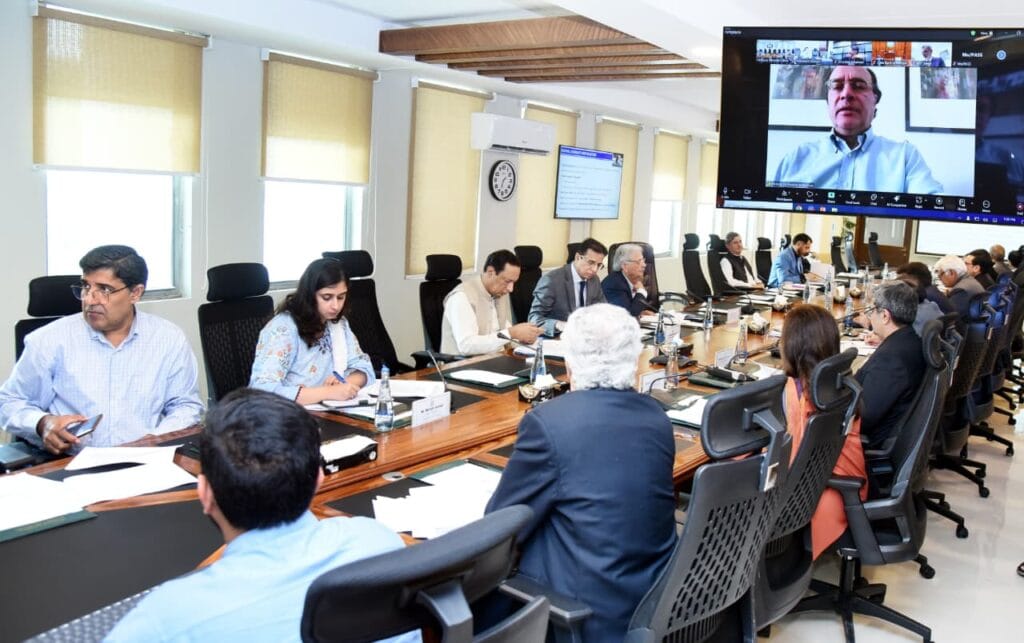
ISLAMABAD: The Economic Coordination Committee (ECC) of the Cabinet, chaired virtually by Federal Minister for Finance and Revenue Senator Muhammad Aurangzeb, convened on Monday to review and approve key economic proposals, including an electric vehicle subsidy scheme, a technical supplementary grant (TSG) for the Telegraphic Transfer Charges Incentive Scheme, and a bailout package for Quaid-i-Azam University (QAU).
The ECC gave its nod to a proposal by the Ministry of Industries and Production regarding the implementation of a subsidy scheme aimed at encouraging the adoption of electric bikes and rickshaws/loaders in the country. The government has allocated Rs9 billion in the budget for FY2025-26 to finance this green mobility initiative. The scheme will also reward top-performing students in government colleges with free electric bikes.
According to the approved plan, a total of 116,000 electric bikes and 3,170 electric rickshaws/loaders will be distributed in two phases. In the initial phase, which is expected to be launched soon by the Prime Minister, 40,000 electric bikes and 1,000 electric rickshaws/loaders will be rolled out.
The ECC also approved a technical supplementary grant of Rs30 billion to settle pending claims from FY2023-24 under the Telegraphic Transfer Charges Incentive Scheme. The total outstanding claims stood at Rs58.26 billion. The Committee directed the Finance Division to coordinate with the State Bank of Pakistan (SBP) to finalize payment modalities. Furthermore, the Finance Division was instructed to complete a comprehensive assessment—covering pros and cons, financial modalities, and opportunity costs—of the Pakistan Remittance Initiative in consultation with the SBP. The final recommendations are to be presented by mid-September, following an in-depth analysis due by the end of August.
In another important decision, the ECC granted in-principle approval for a Rs2 billion bailout package for Quaid-i-Azam University. However, the release of funds is contingent upon the submission of a detailed financial self-sustainability plan. The university, in coordination with the Higher Education Commission, has been tasked with presenting a roadmap aimed at achieving long-term financial stability and reducing dependence on future government bailouts.