 BeNewz

Related Articles



Aftab Maken
ISLAMABAD: The National Assembly’s Standing Committee on Information Technology and Telecommunication has come down hard on Pakistan Telecommunication Company Limited (PTCL), recommending disciplinary action due to serious concerns about mismanagement, lack of transparency, and failure to cooperate with parliamentary oversight. The committee also sharply criticized the broader telecom industry for its deteriorating service quality across the country, particularly in Balochistan and Karachi.
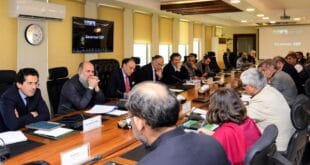
During a heated session chaired by MQM’s MNA Aminul Haque, lawmakers expressed strong disapproval of PTCL and its parent company, Etisalat, for repeatedly failing to provide timely and comprehensive information on the sale and purchase of PTCL properties. PTCL President and Etisalat Group CEO, Hatem Bamatraf, who joined via Zoom, could not appease the committee members. The chairman condemned PTCL for its delayed and incomplete responses, stressing the importance of prompt submission of required documents. MNA Sher Ali vehemently demanded “action against PTCL,” asserting that mere expressions of disappointment were insufficient without accountability.
Lawmakers raised alarm over the potential unilateral disposal of valuable national assets by the PTCL Board and Etisalat, allegedly under the guise of international contracts and without proper parliamentary oversight. Sadiq Memon also criticized the IT Ministry and Privatization Commission for their lack of transparency regarding PTCL’s property transactions. Attempts by Privatization Commission officials to deflect blame by citing the 2006 privatization as an international agreement only further angered the committee. The chairman has postponed the PTCL property agenda, scheduling an in-camera meeting for further discussion.
Beyond financial opacity, PTCL and other telecom companies faced severe criticism for failing to deliver basic telecom services nationwide. Zulfiqar Ali highlighted the persistent lack of mobile signals in many areas of his Balochistan constituency. While the USF CEO claimed relevant projects were “underway,” the PTA Chairman revealed that over 100 telecom towers in Balochistan have been damaged, with internet service completely suspended in Panjgur under orders from the Ministry of Interior. MNA Pauline Baloch starkly described the province as a “war zone” due to severe security and infrastructure issues. Federal Minister Shaza Fatima proposed a joint meeting involving the Interior Ministry, PTA, and IT Ministry in Balochistan to address the crisis.
The situation in Karachi also drew sharp criticism, with Mahesh Kumar noting frequent WhatsApp call drops, questioning, “If this is Karachi, what must be the condition in rural Sindh or South Punjab?” The committee chairman bluntly stated that “Telecom companies have become money-making machines with little regard for service delivery.”
The session also shed light on broader issues within the telecom industry. The PTA informed the committee that 21 Long-Distance International (LDI) operators are entangled in legal battles over license issues, with over 100 related cases pending in courts. A subcommittee has been formed to resolve disagreements between the IT Ministry and telecom operators regarding license fees.
Furthermore, the highly anticipated merger between Telenor and Ufone remains stalled. Committee members accused Telenor of deliberately degrading internet services, a matter which the PTA confirmed is under review by the Competition Commission of Pakistan (CCP).
The PTA acknowledged that 4G services will remain substandard without nationwide fiber deployment. A new fiberization policy is being drafted, and three new submarine cables are anticipated by the end of the year to improve connectivity.
The National Assembly committee’s latest session has exposed significant problems within PTCL and the broader telecom sector, ranging from ignored regulatory directives and service failures to questionable dealings. As lawmakers push for disciplinary action, the focus is now on whether the government and regulatory bodies will take decisive steps or continue to allow telecom giants to operate unchecked while public service suffers.