 BeNewz

Related Articles



Commercial import of used vehicles under five years old now permitted until June 2026, with phased duty reduction planned through 2030.
BeNewz Report
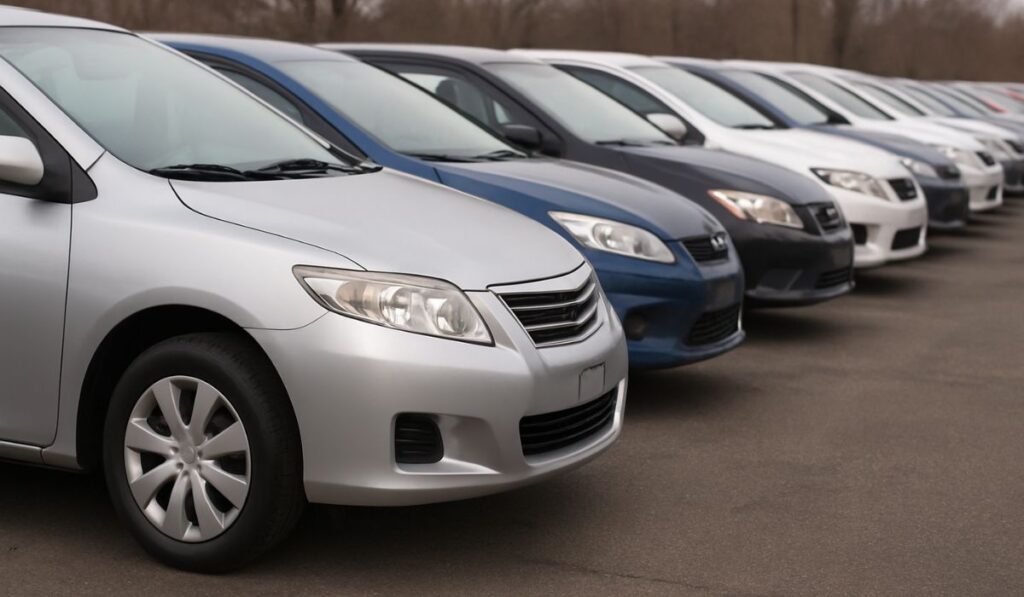
The Ministry of Commerce has officially notified amendments to Pakistan’s Import Policy Order, allowing the commercial import of used vehicles up to five years old, effective immediately. The decision follows the Economic Coordination Committee’s (ECC) recent approval of the policy shift, which includes the imposition of a 40% Regulatory Duty (RD) over and above existing customs duties.
This new policy was ratified during an ECC meeting held on 18 September 2025, chaired by Federal Minister for Finance and Revenue, Senator Muhammad Aurangzeb. The measure is seen as part of broader efforts to liberalize trade and improve consumer access to affordable vehicles while ensuring that environmental and safety standards are maintained.
As per the Ministry of Commerce’s statutory regulatory order (SRO), the commercial import of used vehicles—up to five years old—will be permitted until 30 June 2026. During this initial phase, a 40% Regulatory Duty will apply in addition to the standard import taxes. After this period, the age limit on used cars will be abolished altogether, allowing importers to bring in vehicles of any age.
The ECC has also charted a phased reduction plan for the Regulatory Duty. Beginning in the fiscal year 2026–27, the duty will be reduced by 10 percentage points annually, reaching zero by 2029–30. This schedule aligns with the recommendations of the Tariff Policy Board and reflects the government’s commitment to gradually open the automotive sector to greater competition while managing fiscal impacts.
The policy shift marks a significant departure from Pakistan’s historically restrictive auto import regime. For years, used car imports were heavily regulated, primarily limited to overseas Pakistanis under personal baggage or gift schemes. Commercial imports were largely prohibited to protect the interests of local manufacturers, who dominate a highly concentrated automotive market.
However, persistent complaints about the high cost of locally assembled vehicles, limited consumer choice, and quality concerns have led to mounting pressure on the government to revisit its import policies. Industry observers suggest that this relaxation could help diversify the vehicle market, reduce premiums on new cars, and encourage greater price competitiveness.
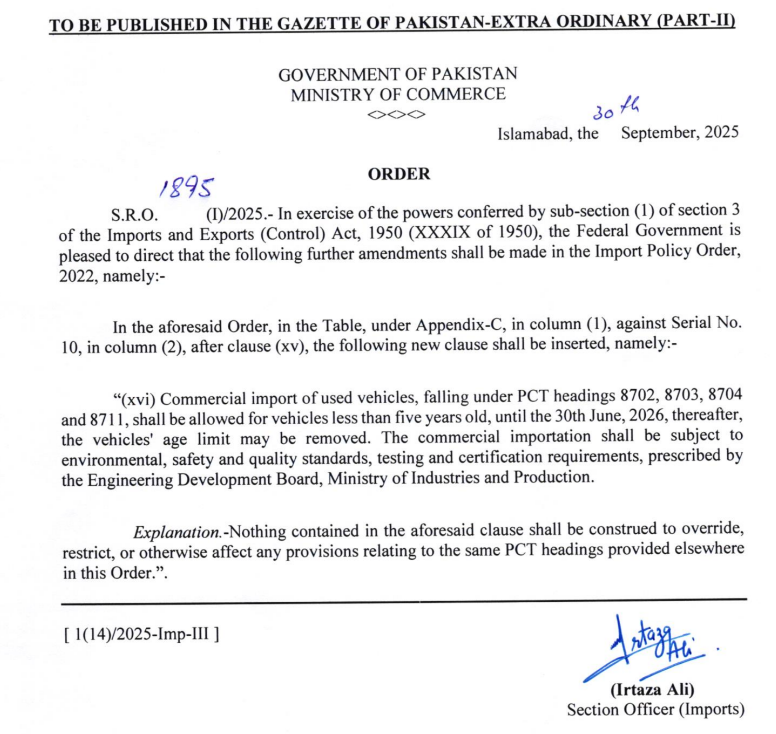
The ECC has emphasized that environmental and safety compliance will be strictly enforced for all commercial vehicle imports. This includes adherence to fuel efficiency norms, emission control standards, and the inclusion of modern safety features, such as airbags and anti-lock braking systems. It is expected that a detailed framework for compliance will be issued soon by the relevant regulatory authorities.
Stakeholder reactions have been mixed. Automobile importers and consumer rights advocates have welcomed the decision, citing the need for more competitive pricing and wider options for consumers. On the other hand, local assemblers are expected to raise concerns about potential market disruption and job losses, especially if the import duty tapering schedule proceeds as planned without offsetting industry support.
The policy could also have implications for Pakistan’s balance of payments. While used vehicle imports may help lower domestic vehicle prices, they could also add pressure to the country’s import bill unless offset by a rise in remittances or export revenues. Analysts suggest that the real impact will depend on the volume of imports and the speed at which local assemblers adapt to increased competition.
With the global auto industry undergoing rapid transitions—driven by electrification, stricter environmental regulations, and changing consumer preferences—Pakistan’s latest move signals a step toward aligning its trade and industrial policies with emerging global trends. It also reflects the government’s attempt to balance consumer interests with revenue considerations and industry competitiveness.
As the phased liberalization proceeds, policymakers will face the task of closely monitoring market dynamics, enforcing quality standards, and ensuring that the regulatory framework evolves to support a sustainable, competitive, and consumer-friendly automotive ecosystem.