 BeNewz

Related Articles



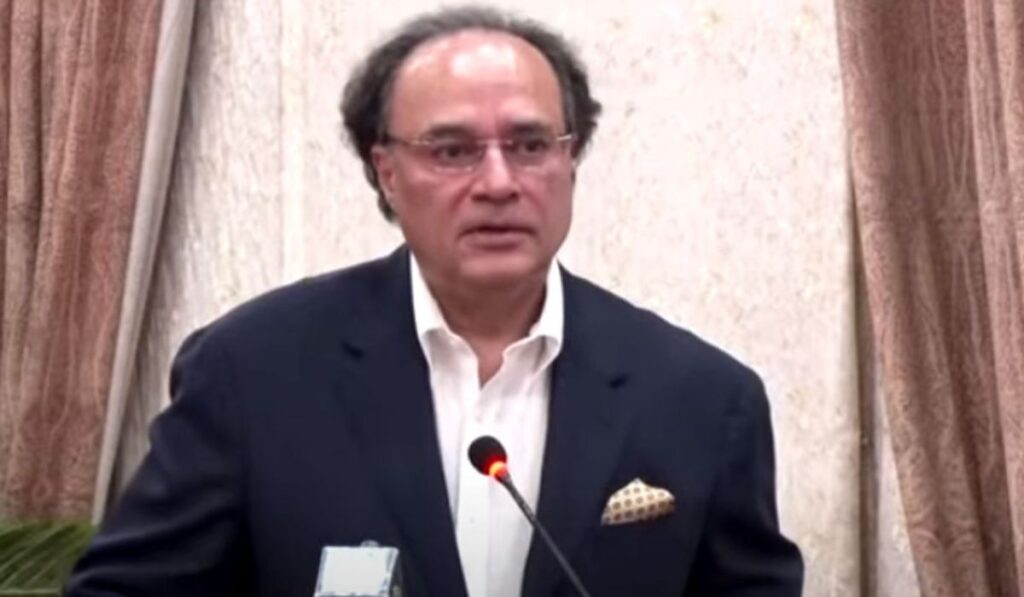
Finance Minister Muhammad Aurangzeb has said that Pakistan will back innovation and regulatory frameworks to help youth and the private sector drive growth.
Finance Minister Muhammad Aurangzeb has reaffirmed the government’s commitment to creating a conducive environment for the private sector, highlighting its role as the main engine of Pakistan’s economic growth. Addressing the Leadership Summit on Blockchain and Digital Assets in Islamabad on Saturday, he underlined the need to accelerate the adoption of transformative technologies such as blockchain and digital assets.
Aurangzeb said Pakistan must embrace the “new economy” driven by innovation, digitalization, and active youth participation. He emphasized that the government stands ready to provide full support in this transition. According to him, between 20 and 25 million Pakistanis, most of them young, are already engaged in digital asset-related activities in one form or another.
Calling the moment an “opportune time to move forward,” the finance minister argued that the country can no longer afford to delay integration of blockchain technology into its economic framework. However, he stressed that progress must remain within a clear regulatory system to ensure transparency, safeguard investors, and prevent misuse.
Pakistan’s stance reflects a broader global debate about how governments should respond to the rapid growth of blockchain applications, from cryptocurrencies and tokenized assets to supply chain management and digital identity solutions. While countries like the United States and members of the European Union have already initiated regulatory regimes for digital assets, developing economies such as Pakistan are now beginning to consider how to harness their potential while minimizing risks.
The minister’s comments also align with the government’s broader economic strategy of involving the private sector in spearheading innovation. Pakistan’s youth, who make up over 60 percent of the population, have become a driving force in the country’s digital economy, with many already participating in online trading, freelancing, fintech startups, and blockchain ventures. Experts believe this demographic advantage could significantly boost Pakistan’s growth trajectory if properly supported through policy frameworks.
Blockchain technology is being increasingly recognized for its potential to improve transparency in governance, financial transactions, and public service delivery. In Pakistan, analysts say it could help reduce inefficiencies in land records, taxation, and financial inclusion while opening new opportunities for entrepreneurs. However, unregulated cryptocurrency markets have raised concerns over fraud, money laundering, and financial instability, issues the government seeks to mitigate through proper oversight.
Aurangzeb’s acknowledgment that millions of Pakistanis are already engaged in digital asset activities highlights the urgency of formalizing a regulatory approach. Industry stakeholders have long argued that Pakistan risks falling behind if it continues to maintain ambiguous policies on blockchain and cryptocurrencies, especially as neighboring countries like India experiment with central bank digital currencies and other innovations.
The summit where Aurangzeb spoke brought together industry leaders, policymakers, and technology experts to discuss ways of integrating blockchain into Pakistan’s economy. Participants stressed the need for collaboration between the government and the private sector to develop pilot projects in areas such as cross-border payments, financial inclusion, and digital identity verification.
While challenges remain, including public awareness, investor protection, and cybersecurity risks, the government’s willingness to engage with blockchain signals a shift in policy thinking. Observers note that Pakistan, often criticized for slow adaptation of new technologies, could leverage its large youth population to turn into a hub for blockchain-driven entrepreneurship if supportive regulations are put in place.
Aurangzeb concluded by reiterating that the private sector must be the “leading force” in driving digital transformation, with the government acting as a facilitator rather than a controller. His remarks are seen as a signal that Pakistan may soon take concrete steps toward formalizing blockchain adoption, potentially paving the way for greater investment and innovation in the sector.