 BeNewz

Related Articles


Aftab Maken
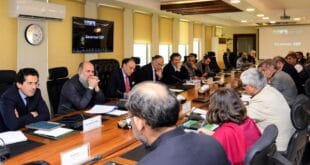
ISLAMABAD: The National Electric Power Regulatory Authority (NEPRA) Tuesday held a public hearing on the Power Division’s request to implement a uniform electricity tariff across the country, including Karachi. This comes with the promising prospect of a reduction in electricity rates, driven by currency stability and declining global fuel prices.
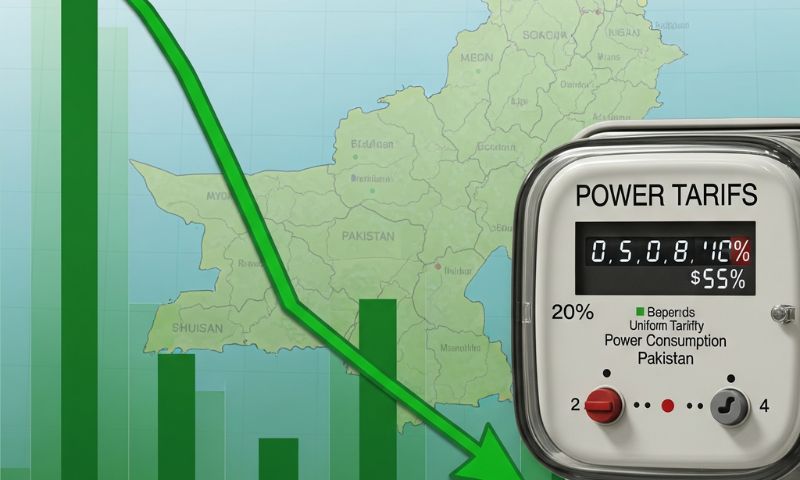
Power Division officials informed NEPRA that a base electricity tariff reduction of Rs1.16 is expected for domestic consumers, potentially bringing the maximum tariff down from Rs48.84 to Rs47.69 per unit. NEPRA has also proposed a cut in the base tariff, with the overall uniform average tariff decreasing to Rs34/kWh from the earlier Rs35.50/kWh, reflecting a reduction of Rs1.50 per unit. A formal notification regarding this will be issued within a few days.
For lifeline domestic consumers, existing rates will be maintained: Rs3.95 per unit for those using up to 50 units per month, and Rs7.74 per unit for those consuming between 51 and 100 units monthly.
Protected domestic users consuming up to 100 units are set to see a Rs1.15 per unit reduction, bringing their rate to Rs10.54 per unit. Protected consumers using between 101 and 200 units may pay Rs13.01 per unit, while non-protected users consuming up to 100 units may be charged Rs22.44 per unit.
Further tariff adjustments proposed by the Power Division for higher consumption brackets include:
101–200 units/month: Rs1.16 decrease to Rs28.91 per unit
201–300 units/month: Rs1.16 decrease to Rs33.10 per unit
301–400 units/month: Rs1.16 decrease to Rs37.99 per unit
401–500 units/month: Rs1.14 decrease to Rs40.22 per unit
501–600 units/month: Rs1.16 decrease to Rs41.62 per unit
601–700 units/month: Rs1.16 decrease to Rs42.76 per unit
Above 700 units/month: Rs1.15 decrease to Rs47.69 per unit
The Power Division attributed this expected reduction to improved currency stability and a decrease in global fuel prices. They highlighted that the average base tariff has fallen from Rs35.50 to Rs34 per unit, with capacity charges dropping by Rs1.34 and power generation costs by Rs1.27 per unit over the past year.
NEPRA has concluded the hearing and is expected to announce its final decision for the new fiscal year after a detailed review of the submitted data. There is a possibility of a Rs1.15 per unit cut in the base electricity tariff.
In a separate but related development, NEPRA on Tuesday, approved in principle, a revised average uniform Schedule of Tariff (SoT) for power Distribution Companies (DISCOs) and K-Electric (KE), setting it at Rs31.59/kWh, down from Rs32.73/kWh, after incorporating a Tariff Differential Subsidy (TDS) of Rs250 billion for FY 2025-26.
During the public hearing, representatives from the Federation of Pakistan Chambers of Commerce and Industry (FPCCI) and K-Electric raised important concerns. Rehan Jawed of FPCCI and Ayaz Jaffer of K-Electric urged NEPRA to ensure KE’s tariff is revised in line with the new determinations, emphasizing that the Power Division cannot overrule NEPRA’s authority in tariff setting.
Arif Bilwani criticized NEPRA’s decision to schedule the hearing on a public holiday, arguing that this practice limits consumer participation and transparency.
A key point of contention was the tariff applicable from July 1, 2025, particularly the expiration of the Prime Minister’s Rs7.50/kWh relief. Aamir Sheikh, representing the industrial sector, pointed out that while the current reduction is only Rs1.15/kWh, the Prime Minister’s relief of Rs6/kWh ended in June, with an additional Rs1.55/kWh ending in July. This could lead to an effective increase of Rs5/unit for industries, potentially making their operations financially unviable. Sheikh appealed to the Prime Minister to utilize funds from the Carbon Levy on furnace oil and the gas levy to extend further relief in electricity tariffs for the industrial sector.